Coal Transitions That Work for Communities: Ecorys at the JETNET Annual Conference
At the JETNET conference in Goa, Ecorys shared European lessons on planning for coal closure, showing that communities in Europe and globally need capacity, coordination and credible livelihoods for a just transition.
The 2nd Just Transition Knowledge Network (JETNET) Annual Conference took place on 26-27 October 2026 at the International Centre Goa, India. convened by the Just Transition Research Centre at IIT Kanpur. This year’s theme is sustainable closures, repurposing and developmental pathways in extractive regions, interrogating how to reconcile energy justice with accelerated decarbonisation.
The conference seeks to bridge research, policy, and practice, bringing together scholars, practitioners, policymakers, industry and communities to generate actionable, interdisciplinary knowledge on sustainable transitions in extractive regions. Ecorys was invited to share European experience and to learn from Indian and global perspectives.
Coal transitions that work for communities: regional lessons from Europe and their relevance for India
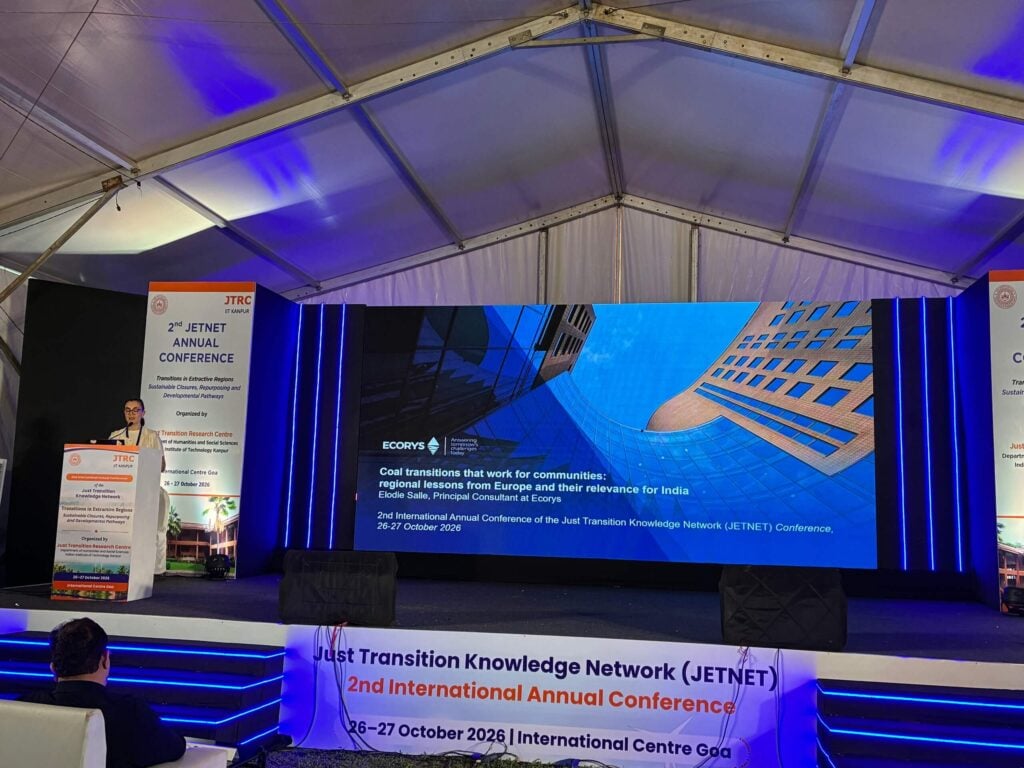
Our session focused on planning for closure, and our presentation focused on what European regional experience can tell us about putting India’s Just Transformation pathway into practice. As India strengthens its approach to mine closure, the debate is moving beyond individual mines towards the transformation of whole coal-dependent regions.
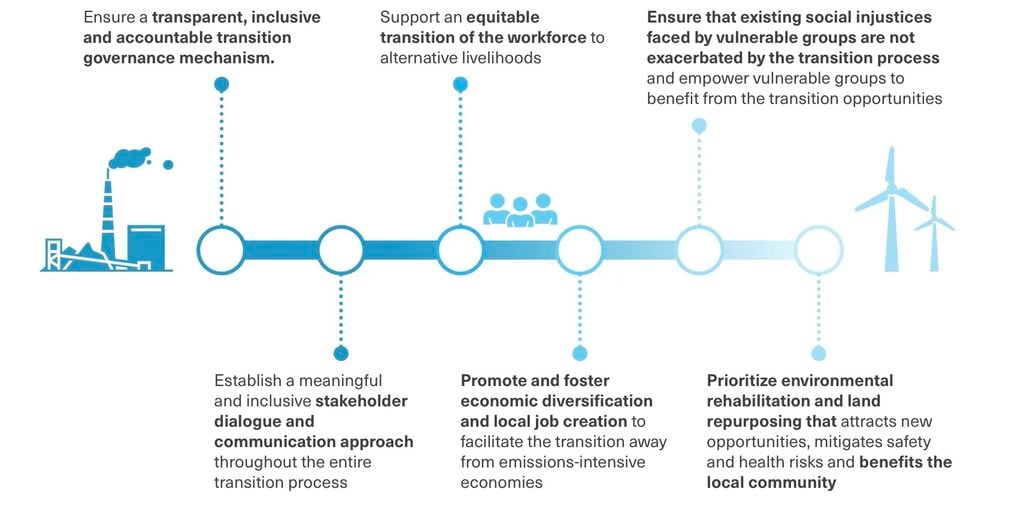
Our work is anchored in the six principles of the World Bank Just Transition Taxonomy, a framework developed with support from Ecorys, and uses them to examine three areas of particular relevance to India.
Drawing on case studies from Poland, Romania, and Greece, the paper looks at community-led diversification, participatory governance, and workforce and livelihood security. It shows that funding alone cannot deliver a locally legitimate transition: communities also need project-development capacity, effective regional coordination and credible alternative livelihoods. European regions are not a model to copy, but their experience offers lessons on early planning, co-creation and sustained participation that India and other countries can adapt to their own context.