Study on identifying energy saving measures
Ecorys studied potential additional policy measures to reduce energy consumption in the Netherlands by 2030 and assessed their savings potential, costs and feasibility.
Introduction
The Netherlands faces a challenge in achieving its energy and climate targets for 2030. Ecorys supported the Ministry of Economic Affairs and Climate Policy by identifying and assessing additional energy-saving policy measures for the industry, built environment, agriculture, mobility and electricity sectors. The assessment considered not only energy savings, but also costs, feasibility and broader societal impacts.
Background
The revised European Energy Efficiency Directive (EED) sets out binding energy-saving targets for 2030. As existing and planned policy measures may not be sufficient to meet these targets, the Ministry required an up-to-date overview of additional policy options. Ecorys drew up a long list of 75 potential measures based on policy documents, international studies and its own expertise. In consultation with the client, this was narrowed down to 32 measures across the sectors of industry, the built environment, agriculture, mobility and the electricity sector. For each measure, the expected energy savings, CO₂ reduction, costs, feasibility and system-wide effects were analysed.
Key findings
The study shows that there is still scope to further reduce energy consumption across all sectors. The most promising measures combine substantial energy-saving potential with limited societal costs and relatively low implementation risks. Measures that build on existing technologies, market developments and policy instruments appear to be particularly promising.
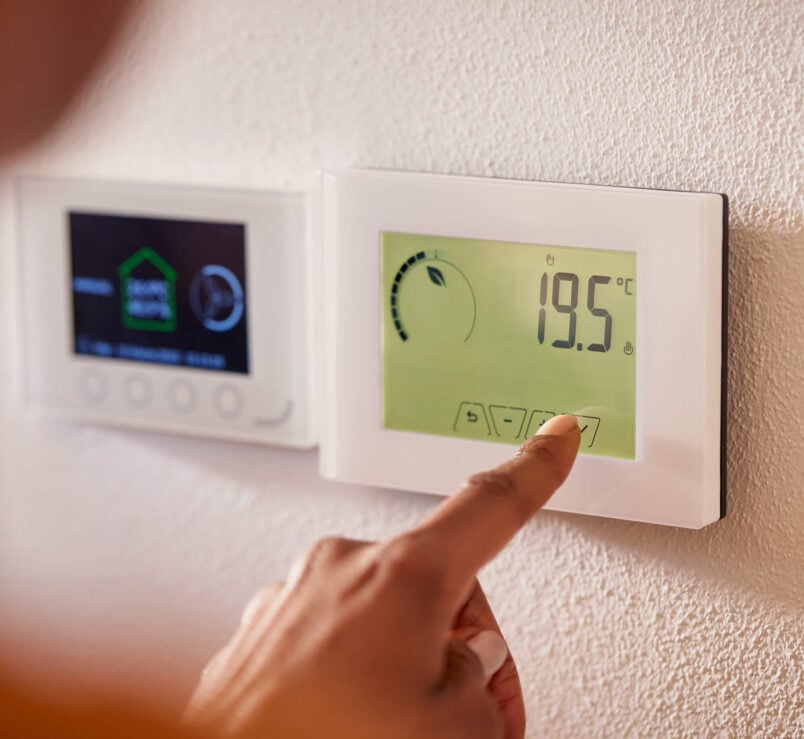
For the built environment, measures such as smart thermostats, targeted subsidy schemes and stricter energy performance requirements for buildings offer an attractive combination of energy savings and feasibility.
In industry, measures such as making better use of waste heat, tightening energy-saving obligations and phasing out new fossil-fuel-fired installations were examined. Although these measures can yield significant energy savings, their effects are highly dependent on enabling conditions such as infrastructure, grid capacity, availability of personnel and international competitiveness.
The study finds that, in the short term, gains can primarily be achieved by intensifying existing policy instruments, rolling out available technologies more rapidly and deploying effective price incentives. At the same time, structural energy savings in the longer term depend on broader systemic changes, such as infrastructure development, market scaling-up and international coordination.
https://www.tweedekamer.nl/kamerstukken/detail?id=2026D36346&did=2026D36346