Evaluating Progress Towards Refugee Self-Reliance and Socio-Economic Inclusion in Ethiopia
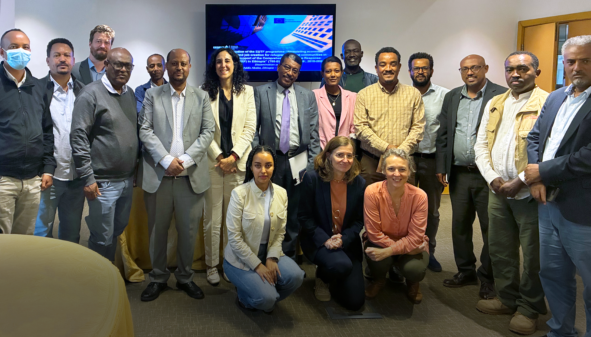
On 16 July 2026, Ecorys and the European Union Delegation to Ethiopia hosted a dissemination seminar in Addis Ababa to share the findings of the final evaluation of the European Union Emergency Trust Fund for Africa programme “Stimulating Economic Opportunities and Job Creation for Refugees and Host Communities in Ethiopia in support of the Comprehensive Refugee Response Framework (CRRF)”, supporting Ethiopia’s transition from a camp-based refugee humanitarian response towards a development-oriented approach focused on refugee self-reliance, socio-economic inclusion, and stronger refugee governance structures.
The event brought together representatives from the European Union Delegation to Ethiopia, UNHCR, implementing partners, government institutions, development partners, and other stakeholders engaged in refugee response and development efforts in Ethiopia.
The dissemination seminar served as a platform for constructive dialogue on what has worked, what remains challenging, and how future interventions can build on the experience generated through the CRRF process and the pilot experience in the Somali Region. Discussions highlighted the importance of government ownership, institutional anchoring and stronger coordination mechanisms to sustain progress on refugee inclusion and implementation of refugee policies.
A recurring theme throughout the discussion was the complexity of creating sustainable livelihoods in fragile and resource-constrained environments: limited labour market absorption, youth unemployment, water scarcity and the realities of pastoralist livelihoods, continue to affect both refugee and host populations in the Somali Region.
The seminar also showcased positive examples of successful small business initiatives supported, including enterprises that created jobs, formalised businesses, mobilised diaspora investments, promoted financial literacy for women participating in village savings and loans associations, and strengthened economic links between refugees and host communities.
The seminar reaffirmed the value of evaluation as a tool for learning and demonstrated a shared commitment to translating lessons learned into more effective and sustainable solutions for refugees and host communities in Ethiopia.
28 July 2026
2 minute read