New study on trafficking for labour exploitation
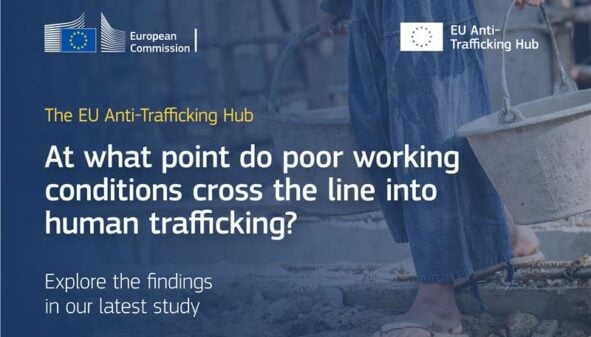
Human trafficking is a serious crime and breach of human rights that impacts thousands of people in the EU and beyond. In order to safeguard victims and to ensure that criminals are brought to justice, it is crucial to distinguish between exploitative labour conditions and actual trafficking in human beings.
Under the EU Anti-Trafficking Hub, led by the European Commission (DG HOME), Ecorys contributed to a new policy paper examining trafficking for labour exploitation in Italy, Finland, France, Spain, and the Netherlands.
The paper highlights that legal rules across the EU are complex, making it difficult to distinguish trafficking in human beings from other forms of labour exploitation. The analysis focuses on three main areas: conceptual clarity – defining trafficking for labour exploitation and related offences; legal interpretation – applying national legislation to labour exploitation; and practical challenges – obstacles to enforcement, prosecution, and victim support.
The main recommendations include:
- Strengthen the use of the human trafficking framework set up by the EU Anti-Trafficking Directive;
- Put in place national guidelines and a common list of trafficking indicators and train investigators and law enforcement staff on their use;
- Proactively initiate investigations under the trafficking framework when cases present indicators;
- Provide access to all victims of labour exploitation to adequate support services, compensation mechanisms and legal remedies, including safe reporting and complaint mechanisms;
- Ensure availability of specialised investigators, prosecutors, and judges who have a thorough knowledge of the legal elements of trafficking for labour exploitation and understand the complex dynamics that underpin exploitative labour practices and their impact on victims.
For further details, key findings and recommendations, find the full study here.
12 December 2025
1 minute read