Poner a los trabajadores en el centro de la transición: perspectivas desde Bangladesh y la UE
Ecorys and the Thomson Reuters Foundation brought EU and Bangladeshi stakeholders together to explore how workers’ voices can shape a fair and practical green transition.
Introducción
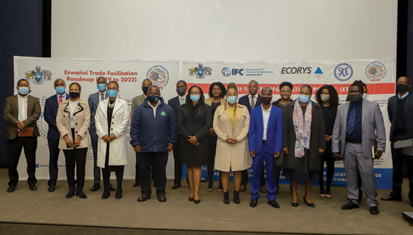
The roundtable organised by the Fundación Thomson Reuters y Ecorys in October 2026 highlighted the importance of bringing together stakeholders from the EU and Bangladesh to engage in open and informed dialogue. The roundtable brought together international organisations, EU institutions, trade unions, civil society, industry and development finance actors from Bangladesh and the EU with one aim: to move beyond high-level commitments and ask what a just transition requires in practice when workers’ realities shape decisions.
From commitments to practice
The discussion was timely. At COP30 in Belém (November 2025), Parties agreed to develop a mecanismo de transición justa, conocido informalmente como el Belém-Antalya Mechanism. COP31, hosted by Türkiye in Antalya from 9 November 2026, is expected to finalise its design.
Just transition is central to Bangladesh’s climate policy. Its updated climate pledge (CDN 3.0), submitted in September 2025, made it the first country in Asia to include a dedicated just transition chapter. In September 2026, a dialogo nacional in Dhaka presented an implementation plan costed at around USD 1.85 billion.
El EU brings substantial experience in policy design and support for affected workers and regions. Since the Acuerdo verde europeo in 2019, and building on earlier work such as the Iniciativa de regiones carboníferas en transición, it has adopted a 2022 Recomendación del Consejo on ensuring a fair transition towards climate neutrality, the Mecanismo de transición justa (incluyendo el Plataforma de transición justa) y el Fondo Social para el Clima.
Bangladesh and Europe have been increasingly bound together by cadenas de suministro over the last decades, as 49% of Bangladesh’s total exports go to the EU. They will be even more so by the transition those supply chains must now advance.
Despite different starting points, the just transition framework gives both sides a shared foundation, particularly across the trade and supply chains that link them. Exchanges of this kind help identify common challenges, good practice and practical routes to collaboration.
Bringing workers’ realities to policy debates
The discussion opened with the twin pressures facing Bangladesh’s workforce. The first is climate exposure: Bangladesh contributes less than 0.3% de emisiones globales, aunque se estima que 250 million working days were lost to heat-related health impacts in 2024. The burden falls most heavily on informal workers, who make up around 84% del empleo.
La segunda es presión del mercado, como alrededor 49% of Bangladesh’s total exports go to the EU, mostly garments, so European standards and due diligence requirements cascade quickly to factories and their workers.
Participants stressed that a green transition is not automatically a just one. Worker representatives pointed to limited worker voice: green initiatives are often business-led, freedom of association remains weak in practice, and heat stress, long hours and inadequate housing are daily realities for many workers.
Evidence gaps compound the problem. Hundreds of thousands of informal workers sort textile waste, a role essential to the emerging circular economy, yet they are not captured in labour statistics and fall outside labour protections. Initiatives such as the Thomson Reuters Foundation’s Workforce Disclosure Initiative highlight the importance of improving corporate transparency on workers’ voice, including across supply chains, to better understand working conditions and identify gaps in worker protections. Participants welcomed ongoing ILO support to integrate green jobs into national labour market data, and called for better records so that dedicated funds can reach those who need them.
Changing the narrative, unlocking action
The costs of transition are unevenly distributed. The first concern is buyer requirements without support. Participants described European brands and retailers passing emissions, energy and due diligence requirements down the supply chain, often with unchanged prices, shorter lead times and late changes to orders.
La segunda es expensive finance for smaller firms. Small and medium-sized enterprises struggle to access affordable credit and technical support, so adjustment costs risk falling on workers. Participants called for requirements to be matched by financial contributions from those who set or benefit from them, including brands, governments and investors.
European and Bangladeshi experience offers ejemplos como Spain’s just transition framework, the European Commission’s Iniciativa de regiones carboníferas en transición, the ILO’s support to the Bangladesh Bureau of Statistics to integrate green-jobs and transition data into labour-force information, and Bangladesh’s inclusion of a just transition chapter in its CDN 3.0.
Participants also highlighted the global dimension of Europe’s transition. Europe relies on partner countries for materials and technologies, and its standards directly affect producers and workers abroad. This calls for accompanying measures and for the meaningful participation of trade unions in partner countries.
Key takeaways and openings for action
- Social dialogue is the foundation. A worker-centred transition depends on workers having a real say, through unions, collective bargaining and tripartite dialogue, in decisions that affect the dignity and security of their jobs.
- Dignity is central to workers’ transition. Heat stress, unsafe working conditions and inadequate housing are where climate impacts and the transition meet workers’ daily lives. Including just transition criteria in the appraisal of Bangladesh’s climate finance projects would help direct adaptation finance towards practical, scalable solutions.
- Supplier pressure must not become worker pressure. When environmental requirements are passed down the supply chain without fair prices, longer planning horizons or access to finance, the costs and human rights risks fall on workers, so responsibility has to be shared along the chain. Traceability tools, such as the EU digital product passport, could help show whether recycled materials are sourced fairly.
- Build on Bangladesh’s strengths. Bangladesh is moving early on just transition policy and has a dynamic industrial base, which supports a positive narrative that goes beyond risk management alone. Shorter, industry-based training routes would let workers gain green skills without long gaps in income.
- Good practices exist and should travel. Examples were shared from factories, workers’ organisations, traceability platforms and European just transition processes, and the task now is to document, share and scale them. This requires coordination on two parallel tracks: stronger alignment among governments, donors and UN programmes to avoid duplication, alongside greater transparency across supply chains so that effective approaches can be shared and scaled from factories and suppliers to brands and investors.
Descargar informe
Descargar el informe completo aquí.